Welcome

Dear Neighbors,

Mendham Fire Department will celebrate its 105th year of volunteer community service in 2010. Once again with your assistance our volunteer firefighters have answered the call. Following an over 100-year tradition, your volunteers regularly interrupt their lives, leaving family, friends, and work to answer those in need of assistance. Your support is a strong signal that you value the service of our volunteers, and the significant tax savings of a volunteer department. We appreciate any donation you can make to help our department.

You can also show your support with a donation of time! As with all Volunteer emergency service organizations it is becoming increasingly difficult to recruit new members. We have a real need for additional volunteers, particularly during the school year when many of our most valued members are away at college. Positions are available for anyone aged sixteen and up comprising varying degrees of training and commitment.

Please click here to donate online, via PayPal*

Very truly yours,

Mendham Fire Department Fund-raising Committee

Donations are tax deductible and the Fire Department is eligible for corporate matching gifts through “Mendham Independent Hook & Ladder Co.”

*A PayPal account is not necessary or required to make an online donation.


Share:
  • Print
  • email
  • PDF
  • Facebook
  • Twitter
  • MySpace
  • Add to favorites
  • Google Bookmarks
  • del.icio.us
  • Digg

Time to Check Your Smoke Alarms

This weekend, March 13 and 14, we will all be setting our clocks to Daylight Saving Time. The time change is a good reminder to check your smoke alarms. According to the National Fire Protection Association, more than 66 percent of home fire deaths that occurred between 2003-2006 were in homes without a working smoke alarm. A working smoke alarm significantly increases your chances of surviving a deadly home fire.

A properly installed and maintained smoke alarm is the only thing in your home that can alert you and your family to a fire 24 hours a day, seven days a week. Whether you’re awake or asleep, a working smoke alarm is constantly on alert, scanning the air for fire and smoke. Smoke alarms must be maintained! A smoke alarm with a dead or missing battery is the same as having no smoke alarm at all, so test your smoke alarm monthly by pushing the “test” button, if it has one.

Smoke alarms are powered by either a battery or are hardwired into your home’s electrical system. Hardwired smoke alarms are usually equipped with a backup battery. If your smoke alarm is powered by battery, the battery needs to be replaced annually unless it is a long-life battery (check the owner’s manual). All batteries should be maintained and replaced in accordance with manufacturer’s guidance.

Choose an annual date, such as the time change, when you will remember to maintain your smoke alarm in tip top condition. Check the manufacturer’s expiration date on the label, replace the batteries if needed, and clean dust away from the slots so that smoke can enter freely. All smoke alarms, hard-wired and battery powered, should be replaced every ten years. These simple steps will help ensure that you and your family will have the best chance of surviving if fire should strike.

USFA has a fire safety campaign called Install. Inspect. Protect. which provides information about home smoke alarms and fire sprinklers. Please visit the campaign Web site at www.usfa.dhs.gov/campaigns/smokealarms/.


From the U.S. Fire Administration website, for more information please visit: www.usfa.dhs.gov.


Share:
  • Print
  • email
  • PDF
  • Facebook
  • Twitter
  • MySpace
  • Add to favorites
  • Google Bookmarks
  • del.icio.us
  • Digg

T-Shirts

Just in time for the Holidays! Order you Mendham Fire Department “Supporter” t-shirt today as a gift for you favorite “Future Fighter” or “Buff” or treat yourself.

The 100% heavy cotton t-shirts are offered on sizes from Youth Small through Adult XXL. To shop simply click here or follow the “MFD Stuff” link at the top of the page.


Share:
  • Print
  • email
  • PDF
  • Facebook
  • Twitter
  • MySpace
  • Add to favorites
  • Google Bookmarks
  • del.icio.us
  • Digg

Members Wanted

The Mendham Borough Volunteer Fire Department began serving the local community in 1905. Its membership has always been, and still is, comprised completely of volunteers from the local area.

Civic-minded residents with a drive to go the extra distance when the alarm rings out have joined the roster and proudly become one of Mendham’s bravest.

For more information or to contact someone regarding membership, please click here.


Share:
  • Print
  • email
  • PDF
  • Facebook
  • Twitter
  • MySpace
  • Add to favorites
  • Google Bookmarks
  • del.icio.us
  • Digg

Ladies Auxiliary

Organized in 1950, The Ladies Auxiliary of the Mendham Independent Hook & Ladder Company will support, encourage and supplement the firemen of the Mendham Fire Department in their service to the community.

The Women’s Auxiliary is in desperate need of Members. If you or someone you know are interested in joining please call 973-543-4682 for membership information, follow the link below to download an application. Membership in the Auxiliary is open to the public for anyone 18 years of age and older.

  • Click Here to download an application. (PDF format)

Share:
  • Print
  • email
  • PDF
  • Facebook
  • Twitter
  • MySpace
  • Add to favorites
  • Google Bookmarks
  • del.icio.us
  • Digg

Fireplace & Home Fire Safety

Download: Fireplace & Home Fire Safety Fact sheet

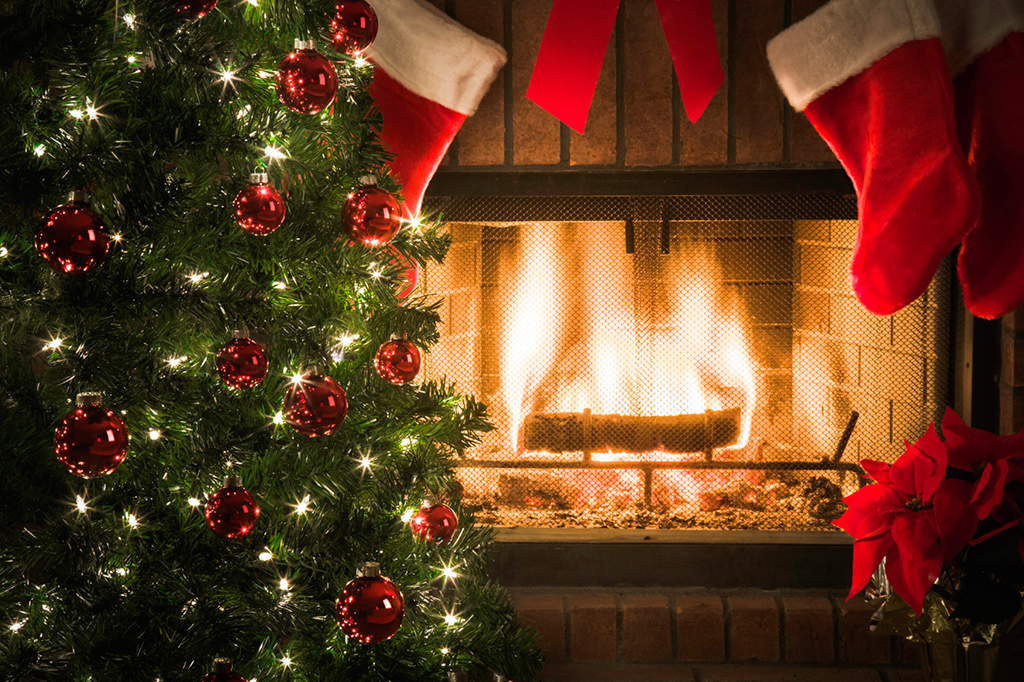
More than one-third of Americans use fireplaces, wood stoves and other fuel-fired appliances as primary heat sources in their homes. Unfortunately, many people are unaware of the fire risks when heating with wood and solid fuels.

Heating fires account for 36% of residential home fires in rural areas every year. Often these fires are due to creosote buildup in chimneys and stovepipes. All home heating systems require regular maintenance to function safely and efficiently.

The United States Fire Administration (USFA) encourages you to practice the following fire safety steps to keep those home fires safely burning. Remember, fire safety is your personal responsibility …Fire Stops With You!

Keep Fireplaces and Wood Stoves Clean
  • Have your chimney or wood stove inspected and cleaned annually by a certified chimney specialist.
  • Clear the area around the hearth of debris, decorations and flammable materials.
  • Always use a metal mesh screen with fireplaces. Leave glass doors open while burning a fire.
  • Install stovepipe thermometers to help monitor flue temperatures.
  • Keep air inlets on wood stoves open, and never restrict air supply to fireplaces. Otherwise you may cause creosote buildup that could lead to a chimney fire.
  • Use fire-resistant materials on walls around wood stoves.
Safely Burn Fuels
  • Never use flammable liquids to start a fire.
  • Use only seasoned hardwood. Soft, moist wood accelerates creosote buildup.
  • Build small fires that burn completely and produce less smoke.
  • Never burn cardboard boxes, trash or debris in your fireplace or wood stove.
  • When building a fire, place logs at the rear of the fireplace on an adequate supporting grate.
  • Never leave a fire in the fireplace unattended. Extinguish the fire before going to bed or leaving the house.
  • Soak hot ashes in water and place them in a metal container outside your home.
Protect the Outside of Your Home
  • Stack firewood outdoors at least 30 feet away from your home.
  • Keep the roof clear of leaves, pine needles and other debris.
  • Cover the chimney with a mesh screen spark arrester.
  • Remove branches hanging above the chimney, flues or vents.
Protect the Inside of Your Home
  • Install smoke alarms on every level of your home. Test them monthly and change the batteries at least once a year. Consider installing the new long life smoke alarms.
  • Provide proper venting systems for all heating equipment.
  • Extend all vent pipes at least three feet above the roof.

From the U.S. Fire Administration website, for more information please visit: www.usfa.dhs.gov.


Share:
  • Print
  • email
  • PDF
  • Facebook
  • Twitter
  • MySpace
  • Add to favorites
  • Google Bookmarks
  • del.icio.us
  • Digg

Candle Fire Safety

Focus on Fire Safety: Candle Fire Safety

With the holidays fast approaching and the increased usage of seasonal decorations, it is important to focus on candle fire safety and prevention.  Because the majority of candle fires result from human error and negligence, candle fires and their associated casualties are preventable.

  • If possible, avoid using lighted candles.
  • If you must use candles, ensure that they are placed in sturdy holders.
  • Keep candles away from children and pets.
  • Be sure to extinguish candles after each use.
  • Never leave burning candles unattended.

By following a few candle fire safety tips, everyone can enjoy a safe and happy holiday season.

Causes and Circumstances of Home Candle Fires
  • On average, one home candle fire is reported every 34 minutes.
  • More than half of all candle fires start when something that could burn, such as furniture, mattresses or bedding, curtains, or decorations is too close to the candle.
  • In one-fifth (20%) of candle fires, the candles are unattended or abandoned.
  • Almost two-fifths of home candle fires begin in the bedroom.
  • Falling asleep is a factor in 12% of home candle fires and 26% of the associated deaths.
  • December is the peak time of year for home candle fires.  In December, 13% of home candle fires begin with decorations compared to 4% the rest of the year.
  • One-half of home candle fire deaths occur between Midnight and 6 am.
  • Young children and older adults have the highest death risk from candle fires.
  • The risk of fatal candle fires appears higher when candles are used for light.
Candle Safety Tips
Put candles in sturdy metal, glass, or ceramic holders.
  • Avoid using lighted candles.
  • If you do use candles, ensure they are in sturdy metal, glass or ceramic holders and placed where they cannot be easily knocked down.
  • Keep candles out of the reach of children and pets.
  • Set a good example by using matches, lighters, and fire carefully.
  • Children should never be allowed to play with matches, lighters, or candles.
  • Never put candles on a Christmas tree.
  • Extinguish candles after use and before going to bed.
  • And NEVER leave burning candles unattended!

Remember!  Candle fires are PREVENTABLE!

In the event of a fire, remember time is the biggest enemy and every second counts!

Escape first, and then call for help. Develop a home fire escape plan and practice it frequently with your family.  Designate a meeting place outside. Make sure everyone in the family knows two ways to escape from every room.

Never stand up in a fire, always crawl low under the smoke, and try to keep your mouth covered. Never return to a burning building for any reason: it may cost you your life.

Finally, having a working smoke alarm dramatically increases your chances of surviving a fire.


From the U.S. Fire Administration website, for more information please visit: www.usfa.dhs.gov.


Share:
  • Print
  • email
  • PDF
  • Facebook
  • Twitter
  • MySpace
  • Add to favorites
  • Google Bookmarks
  • del.icio.us
  • Digg

Know When to Go!

REACT FAST TO FIRE!

The National Fire Protection Association (NFPA) estimates that approximately 80 percent of all fire deaths in the United States and Canada occur in the home. Roughly 11 people per day, die in home fires in the U.S. and Canada. Many lives can be saved if people react immediately when a fire alarm sounds. Once a fire starts, there’s no time to develop a plan. The NFPA urges everyone to “Know When to Go.”

In Single Family Homes: If a smoke detector sounds in your home, leave immediately—do not investigate.

When a Smoke Detector Sounds:

  • Alert others by shouting, “Fire! Everyone outside!” and leave immediately.
  • Test doors with the back of your hand before opening them; if the door is warm, use an alternative escape route.
  • Use windows as alternate exits.
  • If you must exit through smoke, crawl low, keeping your head 12 to 24 inches (30 to 60 centimeters) above the floor, where the air is cleaner.
  • When you are outside, go to your meeting place.
  • Call the fire department using a neighbor’s phone, portable phone, or fire alarm box.
  • Do not go back inside for any reason.
Know What to Do
  • Know at least two ways out of every room.
  • Practice your escape plan with an exit drill every six months.
  • Pick a meeting place outside your home where everyone can gather once they’ve left the building.
  • Keep exit paths clear of furniture and clutter.
  • Make sure the number of your home is clearly visible from the street.
Special Situations

If possible, older adults and people with mobility disabilities should sleep on the ground floor.

Make special plans for anyone who may need assistance escaping.

Let you fire department know whether your household includes someone who may have difficulty escaping a fire.

In High-Rise Buildings: Consult your building management or fire department and know what to do in advance. In some occupanies, such as high-rise apartment buildings, the safest action when a fire alarm sounds may be to stay inside the dwelling unit and protect yourself from smoke until the fire department arrives. Some building evacuation plans may require you to go to a “safe area” inside the building and wait for the fire department to supervise evacuation.

When a Fire Alarm Sounds: If you can hear instructions over your building’s public address system, do as you are told; you might be told to stay where you are.

If You Stay
  • Stay calm and take steps to protect yourself.
  • If possible, go to a room with an outside window or balcony and a telephone.
  • Close all doors between you and the fire. Stuff the cracks around your door with towels, rags, or duct tape and cover vents to keep smoke out of the room.
  • If there is a phone in the room, call the fire department even if you see fire trucks, and report your exact location.
  • Wait at a window and signal for help using a flash light or by waving a sheet or light-colored cloth.
  • If possible, open the window at the top and bottom, but do not break the window.
  • Be ready to close the window quickly if smoke rushes in.
  • Be patient. Rescuing all the occupants of a high-rise building can take several hours.
If You Go

Follow your building’s evacuation plans exactly unless there is immediate danger. Proceed cautiously, checking each door you encounter for heat and each corridor of stairwell for smoke. If you encounter smoke or flames at any point, seek an alternative exit route. If none is available, return to your room, protect yourself from smoke, and wait to be rescued.

  • Elevators should not be used during a fire.
  • If you must exit through smoke, crawl low, under it where the air is cleaner.
  • As you exit, close all doors behind you to prevent the spread of smoke or flames.
  • Once you are out, do not go back inside; tell the fire department if anyone is trapped inside.
Plan Ahead
  • Learn your building’s evacuation plans.
  • Be familiar with the sound of the fire alarm.
  • Learn the location of pull stations that activate your building’s fire alarm, and how to use them.
  • Post emergency numbers near all phones.
  • Know at least two escape routes from your apartment or condo, and pick a meeting place outside.
  • Learn the fastest route to your building’s fire exits so that you can find them, even in the dark

Reprinted from the NFPA pamphlet “Know When To Go! React Fast To Fire”


Share:
  • Print
  • email
  • PDF
  • Facebook
  • Twitter
  • MySpace
  • Add to favorites
  • Google Bookmarks
  • del.icio.us
  • Digg

Fire Extinguishers

Extinguishers Have Limits

USED PROPERLY, a portable fire extinguisher can save lives and property by putting out a small fire or containing it until the fire department arrives.

Portable extinguishers for home use, however, are not designed to fight large or spreading fires. Even against small fires, they are useful only under certain conditions.

The operator must know how to use the extinguisher. There is no time to read directions during an emergency.

  • The extinguisher must be within easy reach and in working order, fully charged.
  • The operator must have a clear escape route that will not be blocked by fire.
  • The extinguisher must match the type of fire being fought. Extinguishers that contain water are unsuitable for use on grease or electrical fires.
  • The extinguisher must be large enough to put out the fire. (Many portable
    extinguishers discharge completely in as few as 8 to 10 seconds.)
Choosing Your Extinguisher

FIRE EXTINGUISHERS ARE tested by independent laboratories and labeled for the type and size of fire they can extinguish. Use these labels as a guide to purchase the kind of extinguisher that suits you needs.

Classes of Fires

There are three classes of fire. All fire extinguishers are labeled using standard symbols for the classes of fires they can put out. A red slash through any of the symbols tells you the extinguisher cannot be used on that class of fire. A missing symbol tells you only that the extinguisher has not been tested for a given class of fire.

Class A: Ordinary combustibles such as wood, cloth, and paper.

Class B: Flammable liquids such as gasoline, oil, and oil-based paint.

Class C: Energized electrical equipment – including wiring, fuse boxes, circuit breakers,
and appliances.

The extinguisher must be appropriate for the type of fire being fought. If you use the wrong type of extinguisher, you can endanger yourself and make the fire worse.

Multipurpose fire extinguishers marked ABC may be used on all three classes of fires.

Remember, in some cases it may be dangerous to use any type of extinguisher. For instance, pressurized extinguishing agent could spread a grease pan fire rather than put it out.

Extinguisher Sizes

Portable extinguishers are also rated for the size of fire they can handle. This rating will appear on the label – for example, 2A:10B:C. The larger the numbers, the larger the fire that the extinguisher can put out, but higher-rated models are often heavier. Make sure you can hold and operate the extinguisher before you buy it.

Installation and Maintenance

EXTINGUISHERS SHOULD BE installed in plain view, above the reach of children, near an escape route, and away from stoves and heating appliances.

Extinguishers require routine care. Read you operator’s manual to learn how to inspect your extinguisher. Follow manufacturer’s instructions on maintenance.

Rechargeable models must be serviced after every use. (Service companies are listed in the Yellow Pages under “Fire Extinguishers.”) Disposable fire extinguishers can be used only once and must be replaced after use.

Remember the Pass-Word

KEEP Your back to an unobstructed exit and stand six to eight feet away from the fire.

Follow the four-step PASS procedure.

PULL the pin: This unlocks the operating lever and allows you to discharge the extinguisher. Some extinguishers may have other lever-release mechanisms.

AIM low: Point the extinguisher nozzle (or hose) at the base of the fire.

SQUEEZE the lever above the handle: This discharges the extinguishing agent. Releasing the lever will stop the discharge. (Some extinguishers have a button instead of
a lever.)

SWEEP from side to side: Moving carefully toward the fire, keep the extinguisher aimed at the base of the fire and sweep back and forth until the flames appear to be out. Watch the fire area. If the fire reignites, repeat the process. *Always be sure the fire department inspects the fire site, even if you thing you’ve extinguished the fire.

Should you Fight the Fire?

BEFORE YOU BEGIN to fight a fire:

  • Make sure everyone has left, or is leaving, the building.
  • Make sure the fire department has been called (dial 911).
  • Make sure the fire is confined to a small area and is not spreading.
  • Be sure you have an unobstructed escape route to which the fire will not spread.
  • Be sure you have read the instructions and that you know how to use the extinguisher.

It is reckless to fight a fire in any other circumstances. Instead, leave immediately and close off the area.


*Reprinted from NFPA pamphlet “Home Portable Fire Extinguishers”


Share:
  • Print
  • email
  • PDF
  • Facebook
  • Twitter
  • MySpace
  • Add to favorites
  • Google Bookmarks
  • del.icio.us
  • Digg

Carbon Monoxide

What it is Carbon Monoxide & what it can do to you

Carbon monoxide (CO) is an odorless, colorless, deadly gas. It can kill you before you know it because you can’t see it, taste it or smell it. At lower levels of exposure, it can cause health problems. Some people may be more vulnerable to CO poisoning such as fetuses, infants, children, senior citizens and those with heart or lung problems. When CO is breathed in by an individual, it accumulates in the blood and forms a toxic compound known as carboxyhemoglobin (COHb). Hemoglobin carries oxygen in the bloodstream to cells and tissues. Carbon monoxide attaches itself to hemoglobin and displaces the oxygen that the body organs need.

Carboxyhemoglobin can cause headaches, fatigue, nausea, dizzy spells, confusion and irritability. Later stages of CO poisoning can cause vomiting, loss of consciousness and eventually brain damage or death.

Carbon monoxide is a by-product of combustion of fossil fuels. Fumes from automobiles contain high levels of CO. Appliances such as furnaces, space heaters, clothes dryers, ranges, ovens, water heaters, charcoal grills, fireplaces and wood burning stoves produce CO. Carbon monoxide usually is vented to the outside if appliances function correctly and the home is vented properly. Problems occur when furnace heat exchanger crack or vents and chimneys become blocked. Insulation sometimes can trap CO in the home.

The Consumer Product Safety Commission and the Mendham Fire Department recommend installing at least one carbon monoxide detector with an audible alarm near the bedrooms. If a home has more than one story, a detector should be placed on each story.

Be sure the detector has a testing laboratory label.

The following is a checklist for where to look for problem sources of CO in the home:

  1. A forced air furnace is frequently the source of leaks and should be carefully inspected.
    • Measure the concentration of carbon monoxide in the flue gases.
    • Check furnace connections to flue pipes and venting systems to the outside of the home for signs of corrosion, rust gaps, holes.
    • Check furnace filters and filtering systems for dirt and blockage.
    • Check forced air fans for proper installation and to assure correct air flow of flue gases. Improper furnace blower installation can result in carbon monoxide build-up because toxic gas is blown into rather than out of the house.
    • Check the combustion chamber and internal heat exchanger for cracks, holes, metal fatigue or corrosion. Be sure they are clean and free of debris.
    • Check burners and ignition system. A flame that is mostly yellow in color in natural gas fired furnaces is often a sign that the fuel is not burning completely and higher levels of carbon monoxide are being released. Oil furnaces with similar problems can give off an oily odor. Remember you can’t smell carbon monoxide.
  2. Check all venting systems to the outside including flues and chimneys for cracks, corrosion, holes, debris, blockages. Animals and birds can build nests in chimneys preventing gases from escaping.
  3. Check all other appliances in the home that use flammable fuels such as natural gas, oil, propane, wood or kerosene. Appliances include water heaters, clothes dryers, kitchen ranges, ovens or cook tops: wood burning stoves, gas refrigerators.
    • Pilot lights can be a source of carbon monoxide because the by-products of combustion are released inside the home rather than vented outside.
    • Be sure space heaters are vented properly. Un-vented space heaters that use a flammable fuel such as kerosene can release carbon monoxide into the home.
    • Barbecue grills should never be operated indoors under any circumstances nor should stove tops or ovens that operate on flammable fuels be used to heat a residence.
    • Check for closed, blocked or bent flues, soot and debris.
    • Check the clothes dryer vent opening outside the house for lint.

Click her to read about CO Alarms & Detectors


Share:
  • Print
  • email
  • PDF
  • Facebook
  • Twitter
  • MySpace
  • Add to favorites
  • Google Bookmarks
  • del.icio.us
  • Digg
Powered by WordPress | Shop the Best Free Cell Phone Deals. | Thanks to Bank Reviews, CD Rates and Best Credit Cards